
5 Remarkable reasons why Malaysia Usa Philippines buy moringa powder from India
India and the Global Moringa Story
There is a quiet story unfolding across farms, processing centers, ports, warehouses, and factories. It begins beneath the Indian sun, where farmers cultivate Moringa oleifera, and travels thousands of kilometers to supplement manufacturers, food companies, cosmetic brands, and health-focused businesses.
India dominates the global moringa market, supplying roughly 80% of the world’s demand. Malaysia, the United States, and the Philippines are among the leading destination markets for Indian moringa powder exports. For international buyers, this trade is not simply about purchasing an ingredient. It is about dependable supply, competitive economics, technical consistency, and documentation.
So why do Malaysia and the Philippines, despite growing native trees, continue to depend heavily on Indian supply? The answer becomes clearer through five practical advantages.
1. Massive Scale and Year-Round Supply
India has more than 380,000 hectares dedicated to cultivation. Tamil Nadu, Andhra Pradesh, Maharashtra, and Karnataka are major agricultural contributors, creating a broad cultivation and sourcing network.
Imagine a manufacturer planning production months ahead. It cannot afford to stop a production line because local leaves are temporarily unavailable. India’s large agricultural base gives buyers access to a wider raw-material pool. This scale supports recurring bulk moringa powder orders and makes export planning more predictable.
For importers, continuity is a commercial advantage. A dependable moringa supply chain reduces shortage risk and helps manufacturers maintain production schedules. That reliability is one reason Indian moringa powder remains attractive to overseas buyers.
2. Significant Cost and Pricing Advantages
The next export advantage appears on the purchasing spreadsheet. Large-scale farming, established agricultural networks, efficient harvesting practices, and developed processing infrastructure can lower overall production costs.
Indian suppliers can consolidate raw materials, process larger volumes, and optimize movement from farming regions to processing facilities. Those efficiencies can create competitive quotations for international customers.
For a supplement company in the United States or a functional-food manufacturer in Malaysia, procurement cost affects margins. Competitive moringa powder pricing can help manufacturers protect profitability.
3. Domestic Supply Shortages in Importing Nations
The Philippines offers an interesting example. Moringa is familiar there and is used in food fortification, herbal applications, and cosmetics. Yet having native trees does not automatically mean having enough commercially processed material for industrial demand.
Commercial cultivation may be fragmented. Processing capacity can differ between regions. Raw-material availability can fluctuate, while tropical weather can disrupt farming and transportation. When domestic supply becomes inconsistent, manufacturers need another source.
India helps fill this gap through a mature cultivation-to-processing ecosystem. Instead of depending entirely on scattered local harvests, buyers can work with established suppliers capable of organizing bulk quantities and preparing export documentation.
Malaysia faces a similar reality. Local cultivation can coexist with imports when industrial consumption grows faster than domestic moringa supply. International sourcing then becomes a strategic necessity.
4. Advanced, Internationally Certified Processing
Growing leaves is only the first chapter. Converting fresh leaves into stable material for international trade requires careful processing.
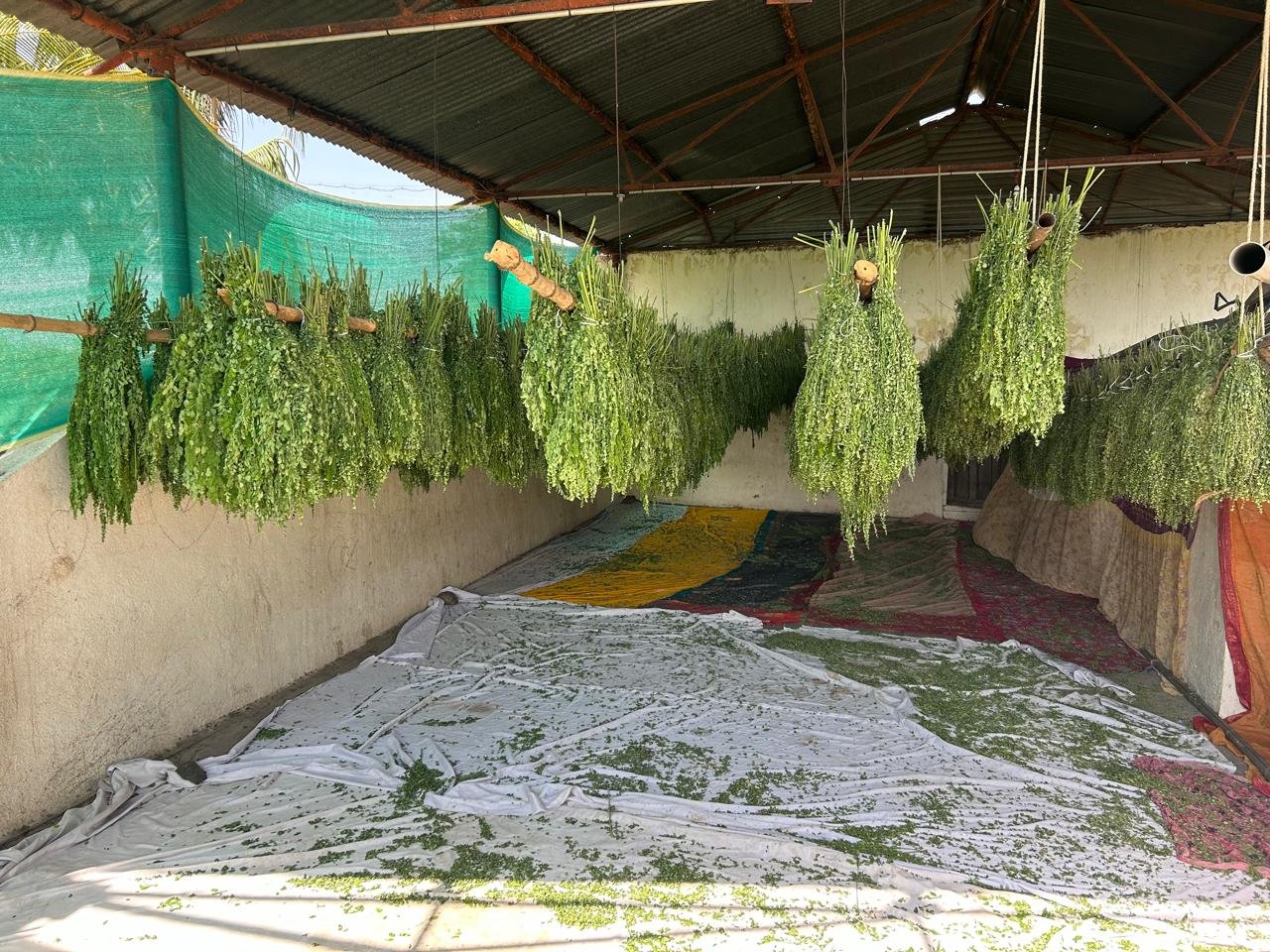
Modern Indian facilities may use shade-drying, solar-drying, controlled drying systems, and ultra-fine pulverization. These methods support moisture control, cleanliness, particle size, and stability.
For regulated markets, laboratory documentation becomes equally important. Depending on destination requirements, buyers may request microbiological testing, heavy-metal analysis, pesticide-residue testing, moisture parameters, nutritional specifications, and other country-specific checks.
Internationally recognized safety and quality certifications can strengthen buyer confidence. Supporting laboratory reports provide additional traceability for individual batches. For an export shipment entering a highly regulated market such as the United States, clean paperwork and appropriate testing certificates can be as important as the physical product.
5. High Nutrient Density and Product Variety
India’s favorable tropical conditions, including suitable sandy-loam soils and climates across southern growing regions, support nutrient-rich leaves. Moringa leaves are valued for antioxidants, iron, calcium, protein, and other naturally occurring nutrients.
International buyers are not always looking for the same specification. One manufacturer may require raw bulk moringa powder. Another may need a finer grade for blending. A specialized company may seek concentrated plant extracts for a particular formulation.
This versatility creates opportunities across industries. Manufacturers can incorporate moringa into dietary supplements, functional teas, fortified foods, wellness products, or skincare formulations.
The journey from an Indian field to an overseas warehouse is therefore more than a commodity transaction. It is a connected chain involving cultivation, harvesting, drying, milling, laboratory testing, packaging, documentation, logistics, and buyer communication.
That is why India continues to strengthen its global position. Massive cultivation provides volume. Efficient infrastructure supports competitive pricing. Established processing facilities improve consistency. Laboratory testing supports compliance. Product variety gives manufacturers flexibility.
For international buyers, that is the real value of sourcing from India: access not simply to moringa, but to a scalable, tested, documented, and commercially practical ecosystem designed to serve markets around the world.
Ultimately, buyers want the same quality, the right documents, predictable supply, and confidence that every shipment is prepared for its destination. India’s scale and processing ecosystem make that consistency increasingly achievable, explaining why global demand continues to connect international manufacturers with Indian suppliers.
For serious buyers, this reliability matters at every stage.